Primary Curriculum Framework
As the first formal year of the school, the primary program is designed to foster intellectual curiosity and lay the foundations for a life-long love of learning. While children develop the skills they need to succeed throughout their education, they are also empowered to make their own connections, draw their own conclusions and construct their own knowledge. We believe in nurturing the whole child and provide an environment in which children can thrive both academically and emotionally. Our program offers a multifaceted and balanced curriculum remaining within the framework of the Nepal Government’s National Curriculum.
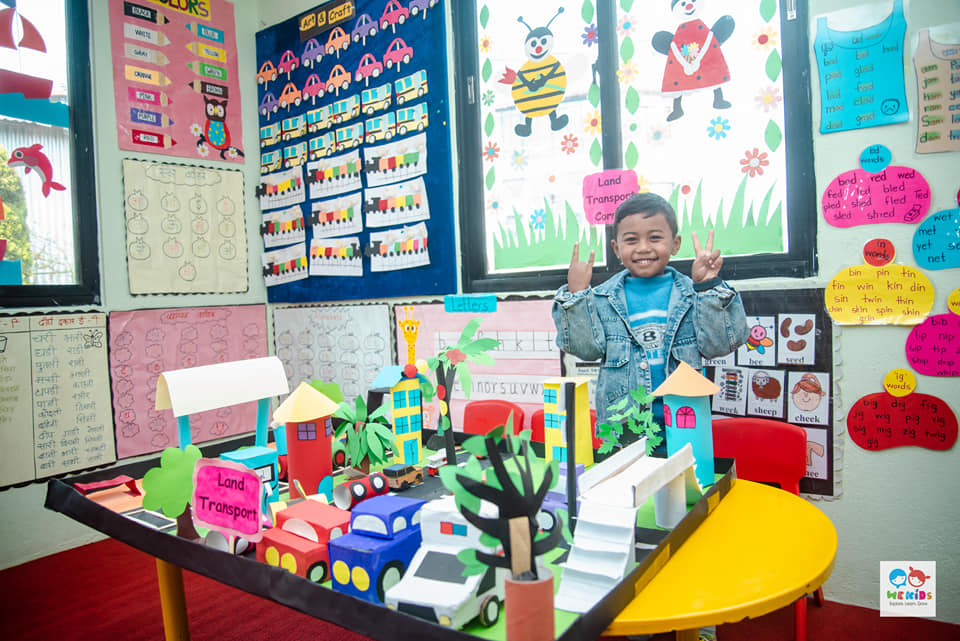
✨ Integrated Themes: Curriculum is integrated and introduced through meaningful themes which spark children‘s natural curiosity and interests. Each theme connects subjects together, making knowledge relevant and engaging
📖 Language & Literacy: We practice a balanced literacy program that incorporates both phonics and whole language. Through environmental print, building phonemic awareness, interactive read alouds and guided reading groups, we are taking steps in our journey to literacy. We are also using invented spelling to write in meaningful ways during our Writer’s Workshop, and practicing letter formation using the Handwriting Without Tears program.
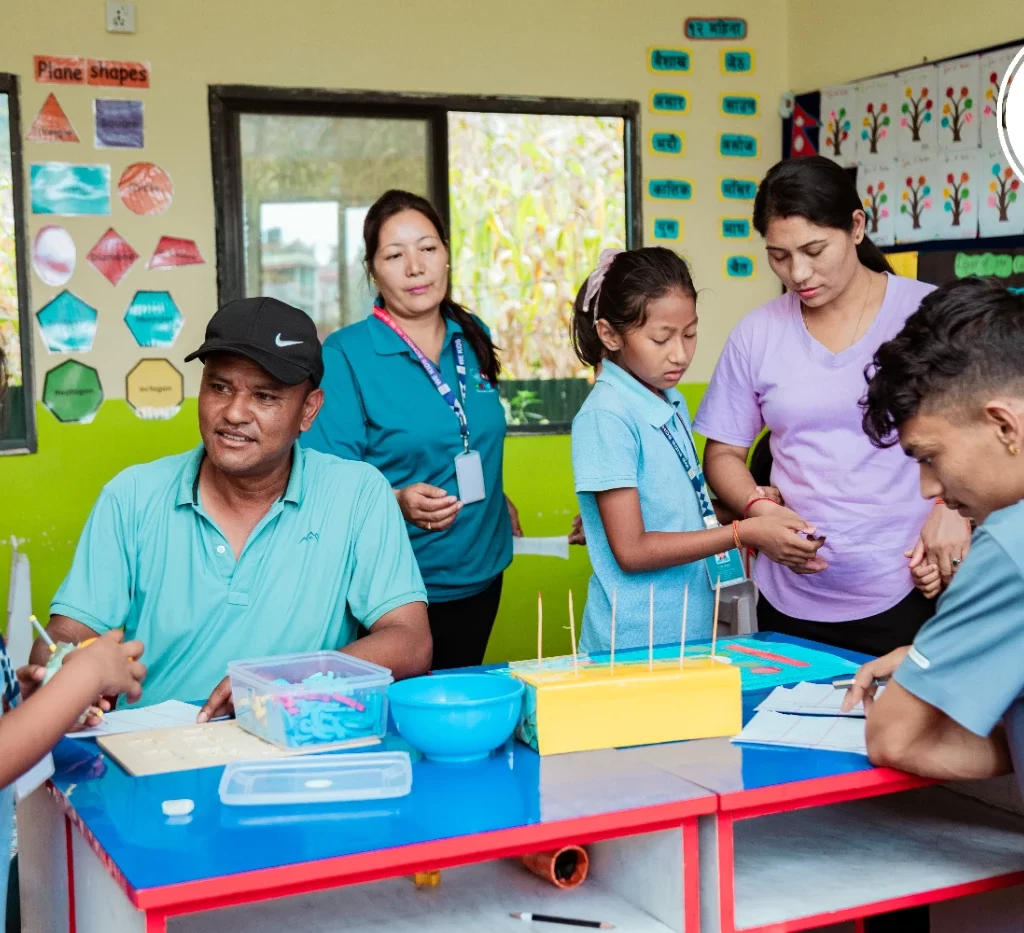
🔢 Mathematics: As the name suggests, our Everyday Math curriculum helps children understand and apply mathematical concepts through the context of their own lives. We use math manipulatives in our classroom, for concrete representation of math ideas. We focus on numbers sense and operations, patterns, geometry, measurement and data analysis.
🌍 Social Studies: Throughout the year we work with the theme; “Respect yourself, respect each other and respect your environment.” We are learning that, by celebrating each other’s differences, we are building a closer classroom community.
🔬 Science: We work with Next Generation Science Standards, which includes the themes of weather and climate, forces of motion, and interdependent ecosystems.
💻 Information Technology: We introduce children to technology in creative, age-appropriate ways. This includes Digital literacy (learning safe, responsible use of computers), Computational thinking (breaking problems into steps, collaborating, and innovating). Technology becomes a tool for creativity, problem-solving, and self-expression.
🤖 Coding and Robotics: Our Coding & Robotics program introduces children to the exciting world of technology and engineering through hands-on exploration. Through coding and robotics, children discover that technology is not just something they consume—it’s something they can create. They learn to innovate, experiment, and bring their ideas to life, preparing them for a future where digital fluency and creativity go hand in hand. This helps to form a strong foundation for STEM learning.
Evaluation of Learning
1. Grades 1–3
Continuous Assessment System (CAS): CAS is the primary evaluation method in the early grades. Students are assessed regularly through ongoing teacher observation, classroom participation, homework and assignments, oral questioning, and practical activities. The system emphasizes holistic development by focusing not only on knowledge but also on the learning process, active participation, and creativity.
2. Grades 4–5
Formal Examinations: Students periodically take written exams that cover core subjects such as Nepali, Mathematics, Social Studies, and Science along local curriculum. The results of these exams are combined with CAS records to determine promotion. This system not only highlights knowledge recall, subject mastery, and exam performance but also values the broader aspects of learning—student participation, creativity, and overall engagement in the learning process.